


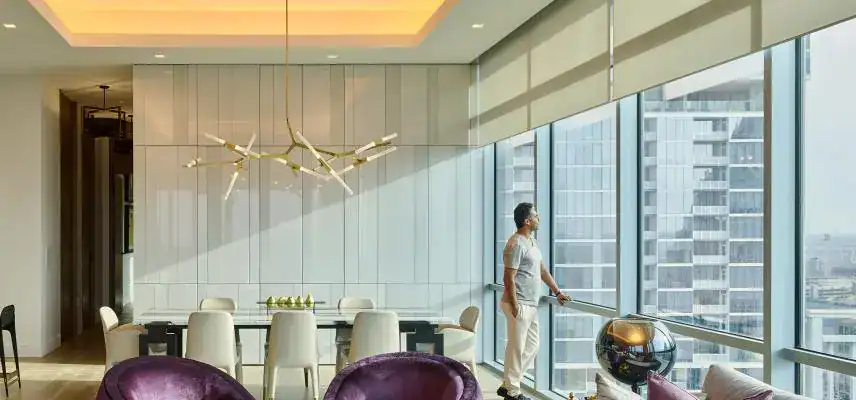
Are Motorized Shades Worth It? A Room by Room Guide
Motorized shades look impressive in a showroom, but a showroom is not your home. The honest answer to whether they are worth it is that it depends on the window. A motor on a hard to reach skylight can change your daily routine. A motor on a small window beside the kitchen table may be a gadget you stop noticing after a month. This guide helps you decide window by window, so you spend where it matters and keep things simple where it does not.
What “worth it” really means
Motorized shades cost more than manual ones, and the price depends on size, the type of motor, how it is powered and how you control it. Because of that, the useful question is not whether motorized shades are good in general. It is whether the convenience, comfort or safety they add in a particular spot is worth the extra investment to you. A few clear signals usually point to yes, and a few point to no.
Windows where motorized shades earn their keep
Windows that are hard to reach
High windows, skylights, stair landings and the tall windows over a bathtub or entry are the classic cases. Shades that stay closed because nobody wants to climb a ladder do nothing for you. A motor turns them into shades you actually use.
Large and heavy shades
Wide shades over big windows or sliding doors take effort to raise by hand, and a long cord is awkward to manage. A motor lifts them smoothly and keeps the movement even from side to side.
Bedrooms
Waking up to a shade that opens on a schedule, or closing every shade at night with one button, is a routine many people notice immediately. It also helps if you share a room with someone who sleeps at different hours.
Sunny rooms and glare
If one side of the house gets strong sun at a certain hour, a schedule or an automatic setting can lower the shades before the room heats up. Our guide on how to reduce heat gain on windows explains why this matters for comfort and for your cooling bill.
Homes with young children or pets
Motorized shades do not need hanging cords, which removes a hazard in children’s rooms and play areas.
Home theaters, offices and living rooms with a screen
Glare on a television or a monitor is easier to control when you can darken the room from the sofa or the desk, without getting up.
Accessibility
For anyone who finds lifting or cord handling difficult, a remote or a wall switch is not a luxury but a practical difference.
Windows where manual shades are enough
Not every window needs a motor. Small windows within easy reach, windows you open once a season, and secondary rooms you rarely use are usually fine with a good cordless manual shade. If a shade stays in the same position for months, the convenience of a motor will not show up in daily life. A sensible plan is often to motorize the windows that cause the most effort or the most glare, and keep the rest manual.
Power and control: two choices that change the experience
How the motor gets power
Battery powered shades are the easiest to add to an existing home, because they need no wiring. The tradeoff is that batteries must be charged or replaced from time to time, and our guide to motorized shade battery life and maintenance explains what to expect. Wired shades take power from the wall and need no battery changes, but they are best planned during new construction or a remodel, when wires can be run before the walls are closed.
How you control them
You can use a handheld remote, a wall keypad, a schedule, a smartphone app, or voice commands, depending on the system. A remote is enough for many homes. If you already use a smart home system, check that your shades work with it before you buy. For a closer comparison of motorized and manual options, read our guide to motorized versus manual shades.
Questions to ask before you decide
- Which windows do I leave closed because they are hard to reach?
- Which windows get glare or heat at a predictable time of day?
- Do I want to control the shades from one place or by schedule?
- Do I prefer to charge batteries, or to have a wired system with no upkeep?
- Am I building or remodeling, so wiring is easy to add now?
- Do I plan to connect the shades to other smart home devices later?
If you answer yes to two or three of these for a specific window, that window is probably a good candidate. If you answer no to all of them, a manual shade is likely the better choice for it.
Planning tips that save money later
- Start with the problem windows. You can add motors to other windows over time if you choose a system that supports it.
- Plan the wiring early. If you are remodeling, tell your contractor before the walls are closed, even if you buy the shades later.
- Match fabrics to the room. The right fabric, light filtering or blackout, matters as much as the motor for how the room feels.
- Measure carefully. A motorized shade has to fit the opening precisely. Our free measuring service takes the guesswork out of it.
Common concerns
Are motorized shades reliable?
Quality systems are built for daily use, but like any motorized product they need correct installation and occasional maintenance. Good installation is a large part of reliability.
What happens during a power outage?
Battery powered shades keep working. Wired systems depend on the system design, so ask about a manual override or a backup option when you plan the project. Our guide on whether motorized shades can be operated manually explains the backup options.
Can I add motors to shades I already own?
Sometimes, but it depends on the shade. In many cases it is simpler to choose a motorized shade for new windows and keep the existing ones where they are.
Our view
Motorized shades are worth it when they solve a problem you can name: a window you never open, a room that overheats, a wall of glass you cannot manage by hand, or a bedroom routine you want to simplify. They are not worth it when they are added everywhere just because they can be. Start with the windows where you would feel the difference every day, and you will probably be happy with the result.
If you would like help deciding, you can read more on our motorized shades page or contact us to talk through your windows. We serve homes across Sonoma, Napa and Marin.
We install motorized shades ourselves across Sonoma County and Marin. Our local pages cover window shades in Sonoma, custom blinds in Petaluma and motorized shades in Mill Valley, and every project starts with a free in-home consultation.
Want a price guide for every shade type? Read how much window shades cost.
Living in Santa Rosa? Shade.Shop offers free in home measuring and installation for window shades in Santa Rosa, and across Sonoma, Napa and Marin.



Add comment