

How to Choose Outdoor Roller Shades for Your Patio
A patio can be the best room in the house until the afternoon sun hits it. Outdoor roller shades fix that by dropping a screen of fabric over the open side of the space, and they roll away when you want the view back. Choosing the right one comes down to a few decisions: how much sun and wind the patio gets, what fabric weave you want, how the shade will be mounted and how you will operate it. This guide walks through each decision so you can talk to an installer with a clear idea of what you need.
Start with the sun and the wind
Look at your patio at different times of day. Note which side the sun comes from and when it is strongest. A west facing patio usually needs the most protection in late afternoon, while a south facing one gets high sun for much of the day. The direction tells you where shades will do the most good and how much coverage you need.
Wind matters as much as sun. A shade that is fully lowered acts like a sail in a strong gust. Open, breezy spots need shades with heavier hardware, tracks or guides that hold the fabric steady, and a way to retract them when the weather turns. In sheltered courtyards you have more freedom.
Pick the fabric weave
Outdoor shade fabric is a woven screen, and the weave is described by an openness percentage. A tighter weave blocks more sun and glare and gives more privacy. A more open weave keeps the view clearer and lets more air and light through. Our guide to what solar shades are and how they work explains openness in more detail.
- For a patio with a view you want to keep, a more open weave is a good starting point.
- For a hot, bright side of the house, a tighter weave gives you more relief.
- Darker fabrics tend to cut glare and keep the view clearer, while lighter fabrics reflect more light.
Outdoor fabrics are made to resist sun and moisture, which is one reason outdoor shades differ from the indoor versions. You can see the range in our outdoor shades collection.
Decide how it will be mounted
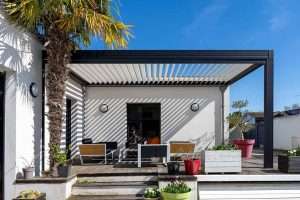
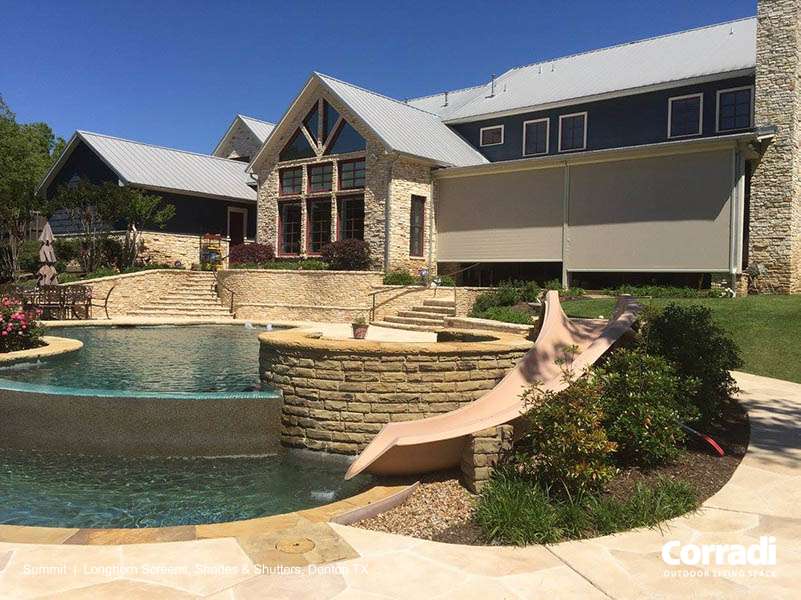
Mounting depends on your structure. Common options include the underside of a roof or pergola beam, the face of a wall or fascia, or between posts. The goal is a clean fit with as little gap as possible at the sides and the bottom, because gaps let in sun and wind. A professional measurement helps here. Our guide on how to measure your windows for new shades covers the basics, and the same care applies to openings outdoors.
If you have a pergola or a covered patio, check what the structure can support. The headrail, the fabric and any side tracks all add weight and need solid anchoring.
Choose how you will operate it
- Manual. A crank or a pull system is simple and has no electronics. It works well for smaller shades you use occasionally.
- Motorized. A motor with a remote or wall switch is the easy option for wide or tall shades. It also lets you retract the shade quickly if the weather changes. Our guide to motorized shades in wine country explains how motors fit into a home.
- Automated. Some motors can pair with sun or wind sensors, so the shade responds to conditions by itself. That is useful if you are away from home or want shades to retract when the wind rises.
For the full picture of when a motor is worth it, read are motorized shades worth it.
Think about privacy and use
A shade for a dining patio is different from a shade for a pool deck or a front porch. Ask yourself what the space is for. If privacy from neighbors is a goal, a tighter weave and a lower lowered position help. If the patio is for entertaining at night, consider lighting and whether you want the shade down at all in the evening. If your outdoor space includes a pergola or a covered structure, our guide to outdoor patio screens in Sonoma shows how screens can work with it.
Plan for the local climate
Sonoma, Napa and Marin have warm, dry summers and bright afternoon sun, with cooler breezes in some areas and fog near the coast. Outdoor shades here work hard from late spring through fall. Choose fabrics rated for sun exposure, and expect to clean the shades from time to time as dust and pollen collect on the fabric. A light brush and mild soap and water are usually enough.
Care and lifespan
Outdoor shades last longest when they are kept clean and rolled up in severe weather. Rinse or wipe the fabric gently a few times a year, and let it dry fully before rolling it. Have the hardware checked now and then, especially after strong storms. Ask about warranty terms for fabric and motors when you get a quote, so you know what is covered.
Frequently asked questions
What is the difference between indoor and outdoor roller shades?
Outdoor shades use fabrics and hardware made to handle sun, moisture and wind. Indoor shades are not designed for weather and will not hold up outside.
Do outdoor shades block the view?
Not entirely. Because they use a woven screen fabric, you can usually see through them from inside the shaded area. A more open weave gives a clearer view and a tighter weave gives more sun control and privacy.
Can outdoor shades handle wind?
They can handle normal breezes when they are installed with the right hardware and guides. In strong wind they should be rolled up. A motor with a wind sensor can do that for you automatically.
Should I choose manual or motorized outdoor shades?
Manual works for small shades you use now and then. A motor is better for wide or tall shades and for anyone who wants to retract them quickly. See our motorized shades cost guide for what to expect.
Does Shade.Shop install outdoor shades?
Yes. We measure, build to order and install outdoor shades in Sonoma, Napa and Marin. Check our service areas to see if we cover your town.
Want a second opinion on your patio? Book free in home measuring and we will help you pick the right fabric, mounting and controls.