

What Are Solar Shades and How Do They Work?
Solar shades are window shades made from a woven screen fabric that cuts glare and some of the sun’s heat while still letting you see outside. If you have a room that gets bright afternoon sun, or a view you do not want to cover up, they are one of the most practical choices. This guide explains how solar shades work, what the openness percentage means, how they differ from blackout shades and which rooms they suit best.
How solar shades work
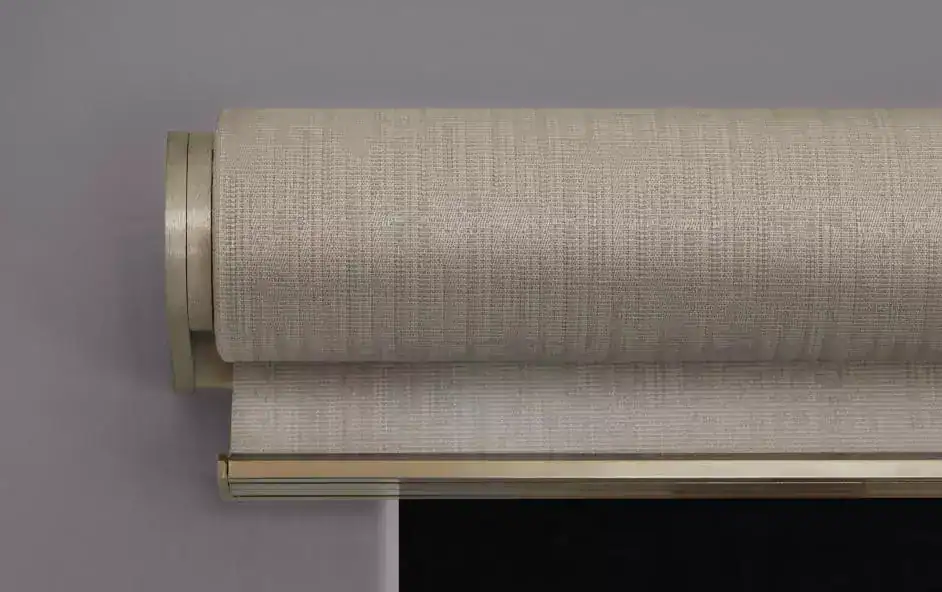
A solar shade is a roller shade made with a tightly woven screen fabric instead of a solid material. The weave has tiny openings. Part of the sunlight is blocked or reflected by the fabric before it reaches the room, and the rest passes through as softened daylight. Because the openings are small and evenly spaced, you can still see through the shade from inside during the day. The shade rolls up onto a tube at the top of the window, just like any roller shade.
The effect you notice most is glare control. A bright window that used to wash out a television or computer screen becomes comfortable to look at. The fabric also reduces the amount of solar heat coming through the glass, which helps rooms that warm up quickly in the afternoon.
What openness means
Solar fabrics are described by an openness factor, a percentage that tells you how open the weave is. A lower percentage means a tighter weave. A higher percentage means a more open one.
- Lower openness blocks more light and glare and gives you more privacy in daytime, but the view outside is a little less clear.
- Higher openness lets in more light and gives the clearest view, but it filters less glare and offers less daytime privacy.
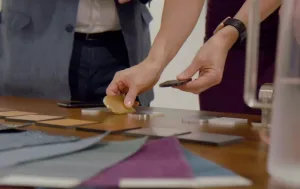
Choosing the percentage is a balance between view and sun control. Many people pick a tighter weave for west facing rooms and a more open weave for rooms where the view matters most. Free swatches are the easiest way to compare them, because the difference is much clearer in your own window than on a screen.
Solar shades and blackout shades
People often ask which one they need. They do different jobs.
- Solar shades keep daylight in the room, reduce glare and preserve the view. At night, with lights on inside, they offer little privacy because people outside can see in.
- Blackout shades use a solid fabric that blocks nearly all light. They are the right choice for bedrooms, nurseries and media rooms, and they give full privacy day and night.
Some rooms use both. A common setup is a solar shade for daytime and a blackout shade or drapery for nighttime privacy. You can browse both styles in our sheer solar shades collection and the roller shades collection.
Where solar shades work best
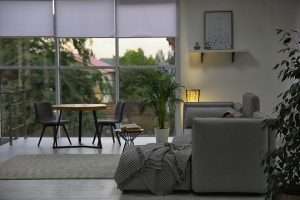
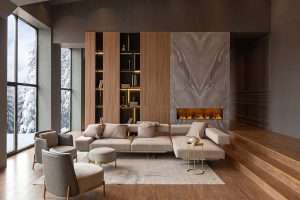
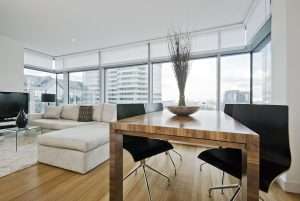
- Living rooms and great rooms. Large windows that face the sun benefit the most. You keep the view and cut the harsh light.
- Home offices. Less glare on the screen without closing the room off from daylight.
- Kitchens and dining rooms. Bright, easy to clean and good for rooms where you want a natural feel.
- Sunrooms and rooms with big glass doors. Heat and glare build up quickly in these spaces, and a solar shade helps keep them usable.
For bedrooms, pair them with another layer or choose a blackout shade instead. If a window is the main source of heat gain in a room, our guide to reducing heat gain through windows compares your options.
Indoor and outdoor solar shades
The same idea works outside the house. Outdoor solar shades are mounted on a patio, porch or pergola and stop the sun before it reaches the space. They use fabrics and hardware made for weather. If you are thinking about shading a patio, see our guide to outdoor patio screens in Sonoma and the outdoor shades collection.
Operation, measuring and care
Solar shades can be operated with a cordless lift, a continuous loop or a motor. A motor is useful on wide windows and tall glass, where the shade is heavy or hard to reach, and it can be set to move on a schedule. Our guide on whether motorized shades are worth it will help you decide.
Accurate measuring matters, because a roller shade that is too wide will not fit the frame and one that is too narrow lets light leak at the sides. Follow our measuring guide, or let us measure for you.
For care, dust the fabric regularly with a soft brush or a vacuum on a low setting. For marks, use a soft cloth with mild soap and water, and let the shade dry fully before rolling it up.
Frequently asked questions
Can you see through solar shades?
From the inside during the day, yes. The weave lets you see outside while blocking part of the light. At night with the lights on indoors, people outside may be able to see in, so add a second layer where privacy matters.
Do solar shades keep a room cooler?
They reduce the amount of sun and heat that enters through the glass, which helps on bright, sunny windows. They are one part of keeping a room comfortable, along with the glass itself and how the room is used.
What openness percentage should I choose?
A lower percentage controls more glare and offers more privacy. A higher percentage keeps the clearest view. Look at swatches in your own window and think about which matters more in that room.
Are solar shades good for bedrooms?
Only with a second layer. Solar fabric lets light through, so a blackout shade or lined drapery is better for sleeping.
Can solar shades be motorized?
Yes. A motor is a common upgrade, especially for large windows and sliding doors. See our motorized shades cost guide for what to expect.
Not sure which fabric suits your windows? Order free swatches or book free in home measuring anywhere in Sonoma, Napa and Marin, and we will help you choose.