

Sheer Solar Shades vs Blackout: Which Should You Choose?
Sheer solar shades and blackout shades look similar when rolled up, but they do opposite jobs. One keeps daylight in the room and softens it. The other keeps nearly all light out. Choosing between them depends on the room, the window and what you want from it at different times of day. This guide compares how each handles light, privacy and heat, and shows how many homes end up using both. If you want a pick for each room in the house, see our guide to the best window shades for every room.
What each shade does
A sheer solar shade uses a woven screen fabric with small openings. It cuts glare, filters sunlight and lets you see outside during the day. Our guide to what solar shades are and how they work covers the openness percentage in detail.
A blackout shade uses a solid, opaque fabric that blocks nearly all light. It darkens a room fully and gives complete privacy. You can browse both styles in our sheer solar shades collection and the blackout roller shades.
Light
Solar shades let some daylight through, so the room stays bright and natural, with the harsh edge taken off. Blackout shades remove daylight altogether. If you want to watch a screen in the afternoon without glare but still feel the day, solar is the better fit. If you want the room dark at any hour, blackout is the answer.
Privacy
During the day, a solar shade gives some privacy because the bright side of the glass hides the interior. At night, with lights on inside, people outside can see in through a solar shade. A blackout shade gives full privacy day and night. This is the main reason bedrooms and bathrooms lean toward blackout.
View
A solar shade keeps your view of the outside, and a lower openness percentage trades some of that view for more glare control. A blackout shade hides the view completely whenever it is down. For rooms with a view you love, such as a living room facing a garden or a hillside, solar shades let you keep it.
Heat and comfort
Both reduce the sun’s heat compared with a bare window. Solar shades cut the heat from direct sun while still letting light in, which helps on bright afternoon windows. Blackout fabric blocks more of the light and keeps the room darker and often cooler when it is lowered, but you lose the daylight while it is down. Our guide to reducing heat gain through windows goes deeper on this.
Which rooms suit which
- Bedrooms and nurseries. Blackout, for sleep and privacy.
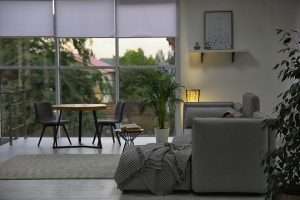
- Living rooms and great rooms. Solar, to keep the view and the daylight while controlling glare.
- Home offices. Solar for screen glare, or both if you also take calls in the evening.
- Media rooms. Blackout, so the room can be fully dark.
- Kitchens and dining rooms. Solar, to keep the room bright and natural.
- Bathrooms. Blackout or a privacy fabric, depending on the window.
Using both in one window
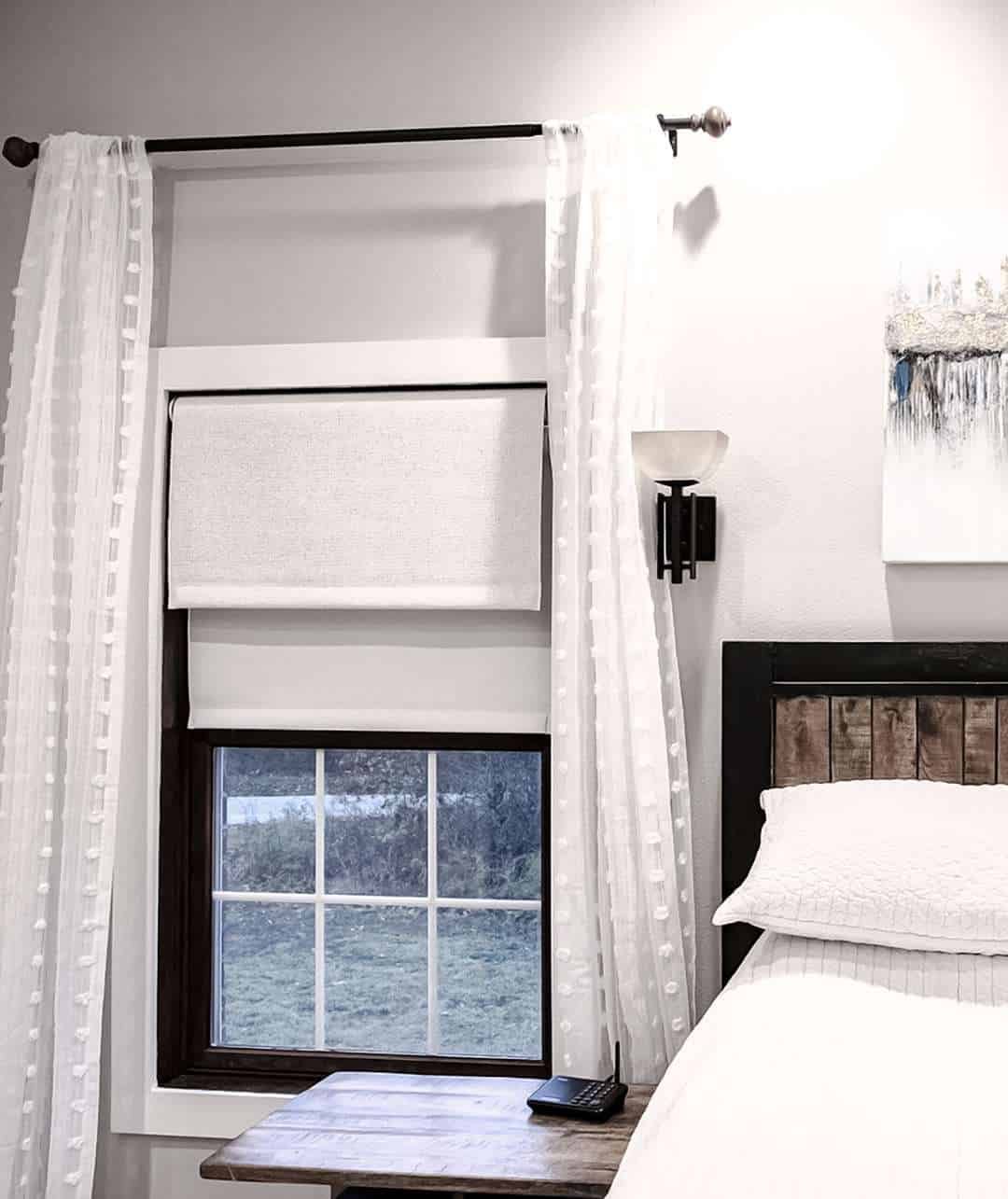
Many homes combine them. A double roller shade pairs two fabrics on one headrail, so you can lower a solar fabric during the day and the blackout fabric at night. It is a good answer for bedrooms with a view and for family rooms that need both daytime softness and nighttime privacy. If you prefer two separate shades or a shade and drapery, that works as well.
A quick way to decide
Ask three questions for each window. First, do you want daylight in this room while the shade is down? If yes, lean solar. Second, do you need the room dark, for sleep or for a screen? If yes, lean blackout. Third, do you want both at different times of day? Then plan for a double roller shade or two layers. Starting with the answer for the room, rather than for the whole house, avoids a mismatch, because a bedroom, an office and a kitchen rarely need the same thing.
Fit matters as much as fabric
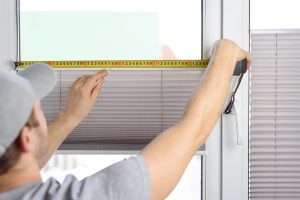
A blackout shade only darkens a room if it fits the opening closely. Gaps at the sides let light leak around the edges, and a shade that is too narrow or too wide will not sit properly in the frame. The same is true of solar shades, where a poor fit shows as light streaks and uneven coverage. Whether the shade mounts inside the frame or outside it also changes how much light gets around it. Measuring carefully, or having it done for you, is what turns a good fabric into a good result.
Operation and cost
Both types can be operated with a cordless lift, a loop or a motor, and a motor is especially useful on wide windows. Cost follows the same factors for both: window size, fabric and operation. Blackout and specialty fabrics tend to cost more than a plain solar weave. Our guide on how much window shades cost compares types, and you can see operation options in the motorized shades page.
Ready to choose your shades? We measure, build and install custom shades across Sonoma, Napa and Marin.
Frequently asked questions
Can I see through a solar shade at night?
People outside can often see in at night when the lights are on inside. Add a blackout layer or drapery where privacy matters after dark.
Is blackout fabric always better for sleeping?
For fully dark rooms, yes. Blackout shades block nearly all light. Light from the sides can still show, so a good fit matters. Accurate measuring helps, and our measuring guide shows how.
Do solar shades keep a room cooler than blackout shades?
Both reduce heat compared with a bare window. Solar shades do it while letting light through. Blackout shades block more light and heat, but the room goes dark.
Can I use a solar shade and a blackout shade together?
Yes. A double roller shade combines both on one headrail, or you can install two shades or add drapery.
How do I choose a fabric?
Look at swatches in your own window. Color and openness look different in your own light than on a screen. You can order free swatches and see how they behave through the day.
Want help choosing for your own rooms? Book free in home measuring anywhere in Sonoma, Napa and Marin, and we will bring fabric samples and talk through each window.